Beginners guide to studying with Flashcards
If you're trying to learn and remember a lot of information you have an enemy and its name is the forgetting curve.
During my high school, university and self-thought pursuits I've tried a lot of effective strategies and tools for learning. There are only few that repeatedly brought great results and one of them is using spaced repetition learning with flashcards.
Flashcards are one of the most powerful, evidence-based study tools available, particularly when built around principles like active recall and spaced repetition.
In 2006, a great research was published by Roediger and Karpicke which demonstrated that testing yourself (active recall) can lead to significantly better long-term retention than passive rereading. Another comprehensive review by Dunlosky in 2013 rated practice testing and distributed practice (spaced repetition) as high-utility techniques for improving learning.
These methods directly counteract the Ebbinghaus forgetting curve, which shows that without review, we forget most new information extremely fast, up to 70% within 24 hours. Spaced reviews dramatically flattens that downward curve and strengthens memory over time.
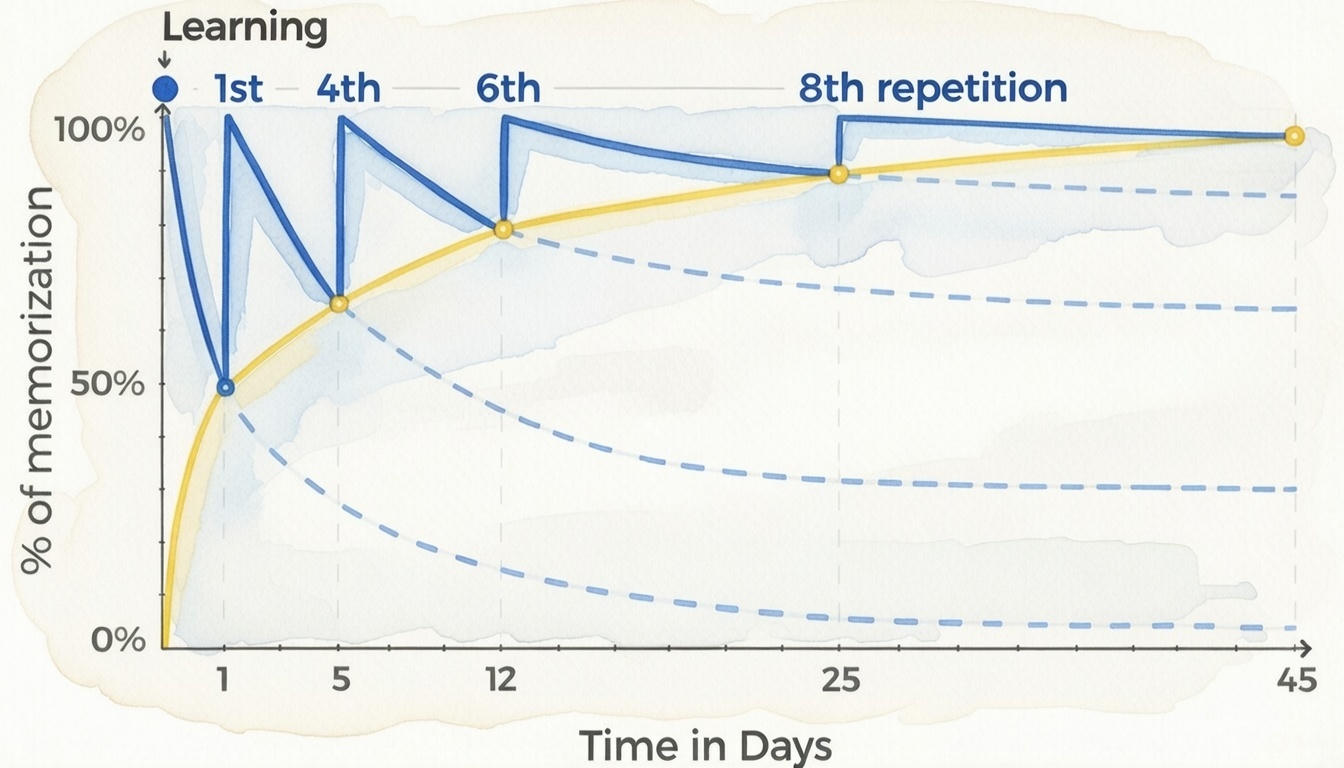
In this guide, we'll explore proven best practices for using flashcards effectively, whether physical or digital. These tips help beginners and experienced learners alike avoid common mistakes and achieve stronger results.
Active Recall: The Foundation of Effective Flashcard Studying
Active recall is an action of forcing your brain to retrieve information without cues. This builds stronger neural connections than passive review.
The best way to build active recall with flashcards is to create your own cards for the subject you are studying.
- break down complex concepts into smaller chunks
- take small pieces of paper
- on front sides write a question
- on back sides write an answer
- Read the front
- Attempt to recall the answer before flipping the card. Say the answer out loud or write it down—this engages auditory and motor pathways for deeper encoding.
- Go to the next card or repeat from step 5.
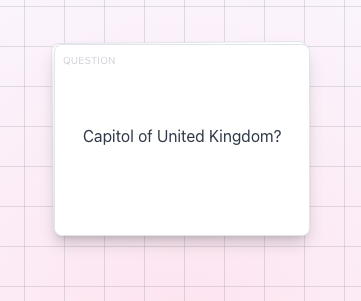
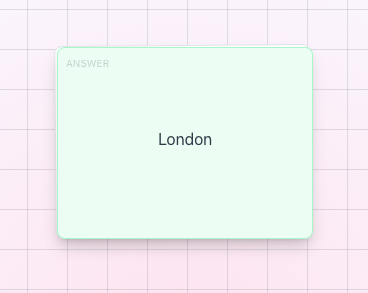
💡 Pro Tip:
If you get it wrong, don't rush ahead. Review the correct answer immediately, then set the card aside for focused re-review later.
Break Down Complex Concepts into Bite-Sized Cards
Overloading a single card with too much information leads to the “illusion of competence” which is a feeling of familiarity without being able to recall details independently.
Keep it simple:
- One card = one specific fact, question, or concept.
- For complex topics (e.g., medicine), create separate cards for each component rather than cramming everything together.
Example:
Instead of one card listing all parts of a cell, make individual cards for "mitochondria function," "nucleus role," etc.
Study Both Directions and Always Shuffle Your Deck
Studying in only one direction (e.g., term → definition) creates fragile, one-sided knowledge.
Best practices:
- Test bidirectionally: definition → term, or question → answer and vice versa).
- Shuffle your deck each session to avoid order-based cues (preventing the serial position effect, where first/last items are easier to remember).
Shuffling and bidirectional testing better mimic real-world recall, like exams.
Use Spaced Repetition System
Reviewing everything daily wastes time on material you already know. Spaced repetition reviews harder cards more frequently while easing up on mastered ones.
Most basic method is the Leitner System:
- Use 3–5 boxes or piles.
- Start all cards in Box 1 (review daily).
- Correct answer? Promote to the next box (reviewed less often, e.g., Box 2: every 2–3 days; Box 3: weekly).
- Wrong answer? Demote back to Box 1.
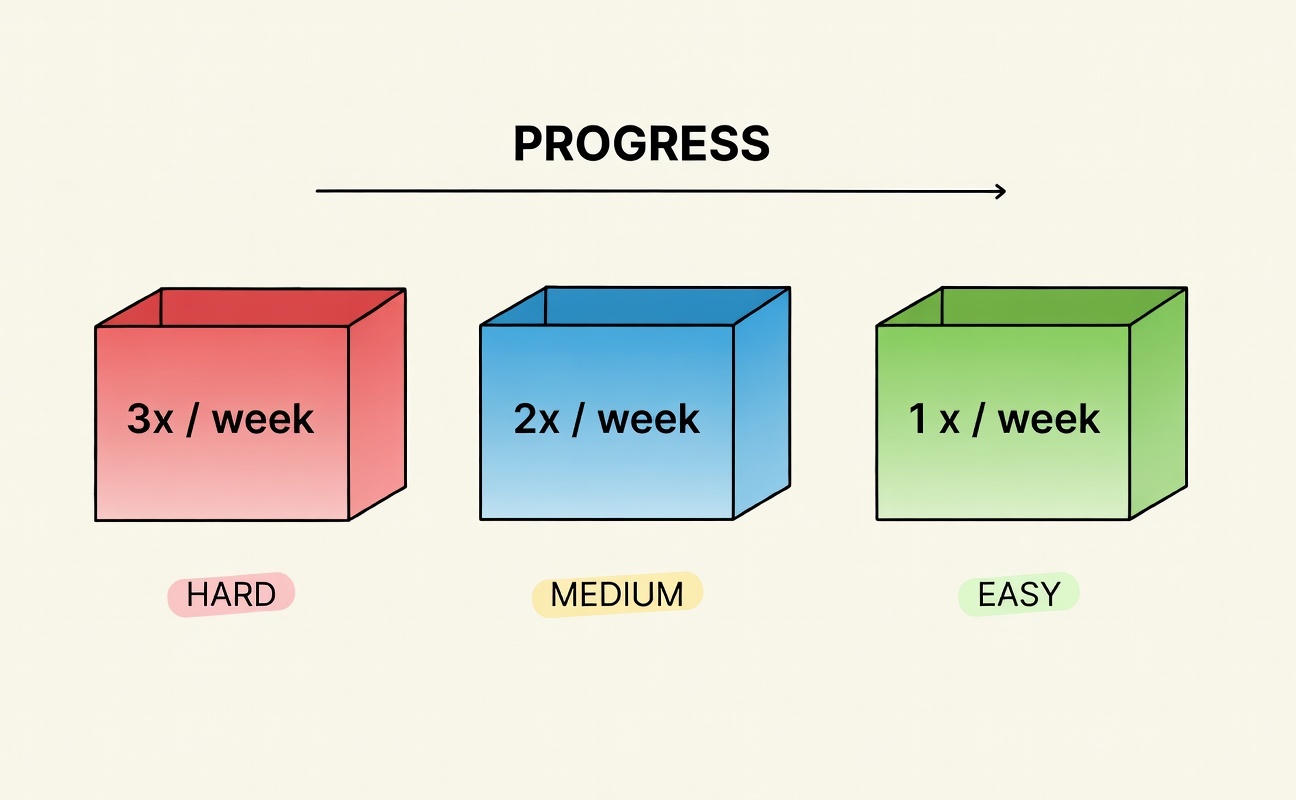
However, using a spaced repetition system is much easier in flashcard apps. These digital tools automate the process with advanced, science-based algorithms, making spacing even more precise and effortless.
Common Mistakes to Avoid
Even well-intentioned studiers fall into these traps:
- Passive flipping without genuine recall attempts.
- Overloading cards with multiple facts.
- Studying in fixed order without shuffling or bidirectional testing.
- Reviewing all cards equally (ignoring spacing).
- Relying on pre-made decks without personalization—creating your own leverages the “generation effect” for better retention.
- Silent review (missing vocal reinforcement).
Digital vs. Physical Flashcards: Which Is Best?
Both formats excel in different ways:
- Physical: Handwriting notes aids encoding and retention (Mueller & Oppenheimer, 2014), plus the tactile experience can boost memory.
- Digital: Automated spaced repetition, easy shuffling, multimedia support (images, audio), and portability.
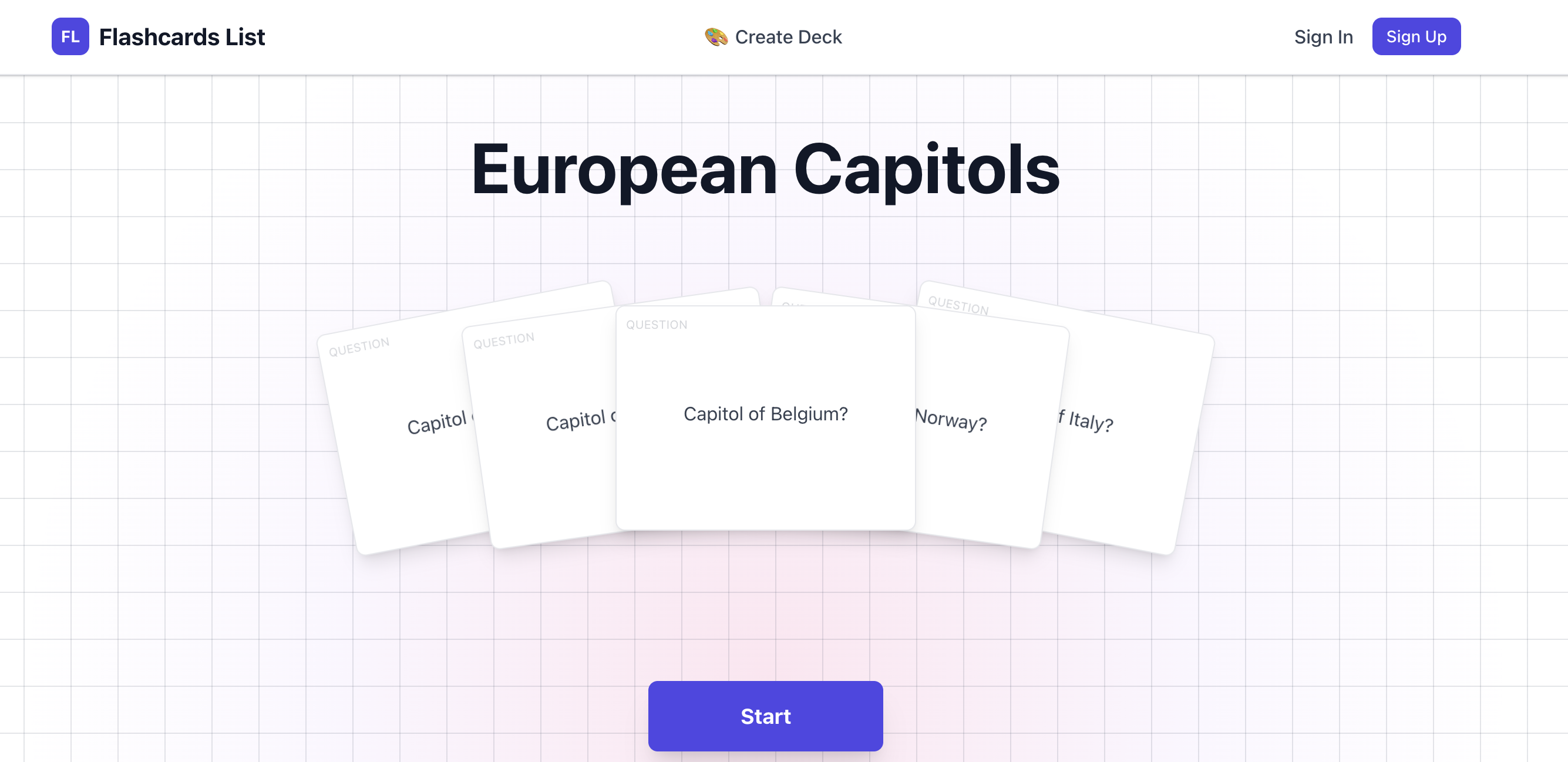
I've done both and both are effective, however I lean strongly towards digital format nowadays. It's time-saving and algorithms for practicing active recall track well with real performance. A free online flashcard maker makes it easy to start without buying index cards or installing heavy software.
Advanced Tips to Level Up
- Add images, mnemonics, or color coding for visual reinforcement.
- Track your progress over weeks and adjust—experiment to find what maximizes your retention.
Frequently Asked Questions
How do beginners start studying with flashcards?▼
Break topics into small chunks, put one question on the front and one answer on the back, then attempt recall before flipping. Start with 10–20 cards and review daily rather than building huge decks at once.
What is the forgetting curve and how do flashcards help?▼
The Ebbinghaus forgetting curve shows we can lose a large share of new information within 24 hours without review. Spaced flashcard reviews flatten that curve by bringing material back just before you would forget it.
What is the Leitner System?▼
The Leitner System uses boxes or piles for spaced reviews. Correct cards move to boxes reviewed less often; wrong cards return to Box 1 for daily practice. Digital apps automate the same idea with smarter scheduling.
Should beginners use digital or paper flashcards?▼
Both work. Paper aids encoding through handwriting; digital tools automate shuffling, bidirectional cards, and spaced repetition. Most beginners progress faster with a simple digital deck they can review anywhere.
What mistakes should flashcard beginners avoid?▼
Avoid passive flipping, overloaded essay cards, fixed study order, reviewing every card equally, and relying only on pre-made decks. Force genuine recall, keep one idea per card, shuffle, and personalize content.
Start Studying Smarter Today
Start implementing these evidence-based practices today. Consistent use of active recall and spaced repetition will transform your studying and lead to lasting knowledge. If you're ready for a smooth digital experience, explore tools like Boost Flashcards to effortlessly put these techniques into action. Your future self (and grades) will thank you!